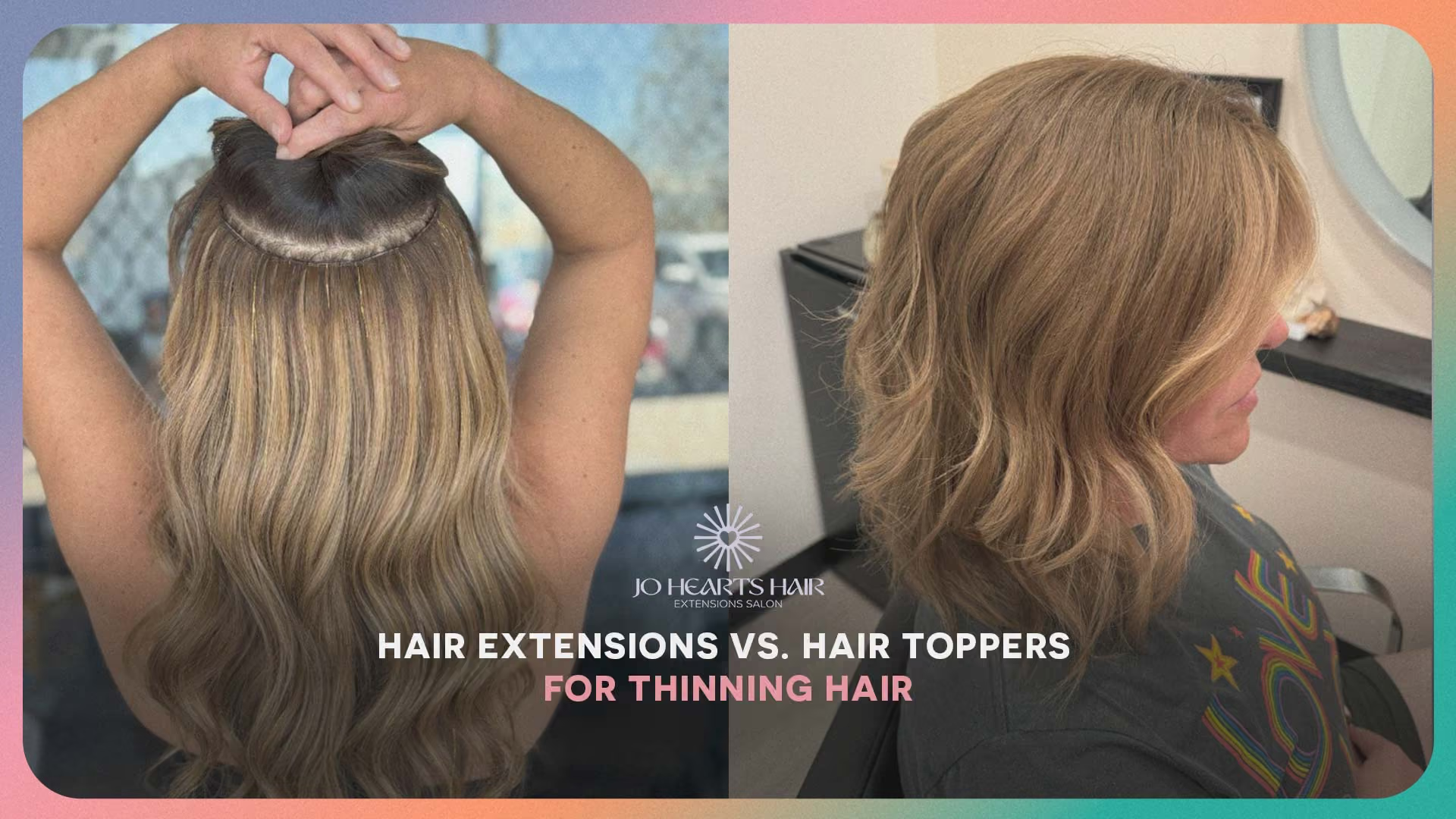
Every few weeks someone sits in my chair, points at their part, and asks it quietly. "Is this from years of extensions, or is something actually happening to my hair?" Sometimes it's the extensions. More often it's not. Either way, that question is exactly why this post exists, so you can walk into a consultation already knowing what to ask.
Extensions and toppers get talked about like they're competing for the same job. They're not. Extensions add length and volume to hair you already have. A topper covers scalp you can already see. Which one is right for you depends less on how much hair you've lost and more on where it's thinning.
I'm certified in Great Lengths and HairTalk USA, and I've sat through enough consultations to have a firm sense of when extensions are the right call and when I need to steer someone toward a topper instead. I'm not a dermatologist, and I'll say that more than once here, but I do know what a scalp can safely carry and what it can't.
Extensions or a topper: what's actually different
Hair Extensions
Length and volume
Strands or wefts added to hair you already have, attached through your mid-lengths and lower scalp. They add length, add fullness, and let you style up or down. They don't cover scalp at the crown or part because there's nothing there for them to attach to.
Hair Toppers
Targeted coverage
A piece built specifically to cover thinning at the crown or part, blended into your own hair around the edges. It doesn't rely on the thinning area to hold it in place, which is exactly why it works where extensions can't.
| At a glance | Extensions | Toppers |
|---|---|---|
| Main job | Length and overall volume | Covers visible scalp at crown or part |
| Attaches to | Existing hair, mid-scalp and below | A base that sits over the thinning area |
| Good fit for | Mild, stable thinning through the lengths | Thinning or patchy loss at the top or part |
| Daily tension on your hair | Some, depending on method and weight | Minimal, weight sits on the base |
| Can be removed nightly? | Only clip-ins | Yes, most toppers |
Where it's thinning matters more than how much
If your part is widening or you can see scalp at the crown, extensions won't fix that. They can't grab onto hair that isn't there, so there's nothing for them to hold onto in that spot.
If your density at the crown is holding up and the thinning is mostly through your ends, from over-processing, heat damage, or just years of the same styles, extensions can genuinely help. They add back what you've lost in length and thickness without asking anything of the area that's already stressed.
I look at the crown and part first, before we talk about anything else. If that area is thin enough to show scalp under normal lighting, I'm going to bring up toppers before you do.
Which attachment methods are actually gentle enough
Not all extension methods put the same amount of stress on fragile hair. This is where a lot of the "extensions will make it worse" fear comes from, and honestly, it's fair. The wrong method on the wrong hair absolutely can.
Lower-tension methods
- Clip-ins, removed nightly instead of worn continuously
- Tape-ins, wide wefts that spread weight instead of concentrating it
- Hand-tied wefts on beaded rows, flat and flexible against the scalp
- Halos, which don't attach to your hair at all
Methods I use more carefully
- Fusion or K-tip bonds, which concentrate weight at a single point
- Micro-links or small rings, especially in dense clusters
- Tight sew-ins or braided bases
- Any method worn for months without a break or checkup
None of these are automatically off the table. It's about matching the method to what your hair can actually hold, and checking in on it, not just installing something and sending you off for a year.
How I actually decide in a consultation
I map density and hair strength zone by zone, not just eyeball the whole head at once. I check the crown, the part, the temples, and the perimeter separately, because they usually aren't thinning at the same rate.
I also ask about timeline. Sudden shedding, patchy spots, or thinning that's gotten noticeably worse over a few months isn't something I try to style around. That's a conversation for a dermatologist first, extensions or a topper second. I'll say it plainly: if what you're describing sounds active or unexplained, I'm going to ask you to get that looked at before we book anything cosmetic. That's just outside what a stylist can responsibly judge, and I'd rather tell you that upfront than pretend otherwise.
My job is to make you feel like yourself again without costing you more hair later.
If your thinning has been stable for a while, or you already know the cause, like postpartum shedding that's leveling off or extensions worn too tight in the past, we can usually move straight into talking about which option fits.
What it actually costs
| Cost breakdown | Extensions | Toppers |
|---|---|---|
| Initial cost | $300-$2,500+, method dependent | $200-$1,500+, human hair costs more |
| Ongoing | Move-ups every 6-10 weeks | Mostly at-home care, occasional refresh |
| Lifespan | 6-12 months with proper care | Several months to a couple years |
| Daily upkeep | Similar to your normal routine | A few extra minutes for clip-in or reattachment |
Extensions ask for more of your calendar over time, with regular appointments to maintain them. A topper is more of an upfront decision, with less ongoing salon time after that unless you want a custom color match refreshed.
My honest take
Choose extensions if
your crown and part still have good density, your thinning is mostly through the lengths or ends, and you mainly want more length or volume without covering visible scalp.
Choose a topper if
you can see scalp at your crown or part in normal light, your loss has been diagnosed as patchy or pattern-based, or you'd rather not put any ongoing tension on hair that's already stressed.
For some clients, it's not either-or. I'll place a topper over the crown and do light, careful extensions through the lengths so the whole head reads as one consistent thickness instead of thin on top and full everywhere else. It takes more planning, but it's worth mentioning because most people don't realize it's an option.
A few things people ask before they book
- My hair started thinning after a stressful year, or after having a baby. Will it come back on its own?
- Often, yes. Shedding tied to stress, illness, or postpartum hormones usually shows up a couple months after the trigger and settles down within six to twelve months. If it's still recent, I'd rather wait and watch than install something over hair that's about to recover on its own.
- I have alopecia areata. Can I still get extensions?
- It depends on where the patches are and how stable they've been. Diffuse or patchy areas usually do better with a topper, since extensions need healthy hair nearby to attach to. I'd want you working with a dermatologist on the condition itself either way.
- Will extensions make my thinning worse?
- The wrong method, the wrong weight, or the wrong placement can. That's exactly what the consultation is for, matching the method to what your hair can actually carry, and adjusting if something's not working.
Frequently asked questions
Can I get extensions if my hair is already thin?
Sometimes. It depends on where you're thinning and how stable it's been. Mild, stable thinning through the lengths is often fine. Visible scalp at the crown usually isn't a good match for extensions.
How do I know if I need a topper instead?
If you can see scalp through your hair at the crown or part in regular lighting, that's the clearest sign. Extensions can't cover an area they can't attach to.
Should I see a doctor before booking a consultation?
If your thinning is sudden, patchy, or has clearly gotten worse over the past few months, yes, see a dermatologist first. If it's been stable for a while or you already know the cause, we can go straight into the consultation.
Can toppers and extensions be combined?
Yes, for the right client. A topper at the crown paired with light extensions through the lengths can even out the overall look. It's not the first option I bring up, but it's on the table.
How long does a consultation take, and what should I bring?
Plan on about 30 minutes. Bring reference photos if you have them, and be ready to talk honestly about your hair history. That's genuinely the most useful thing you can bring in.
{"@context":"https://schema.org","@type":"BlogPosting","headline":"Hair Extensions vs. Hair Toppers for Thinning Hair","description":"Denver stylist Jo DeBolt compares hair extensions and hair toppers for thinning hair, covering safety, cost, and how she decides in consultations.","author":{"@type":"Person","name":"Jo DeBolt"}}