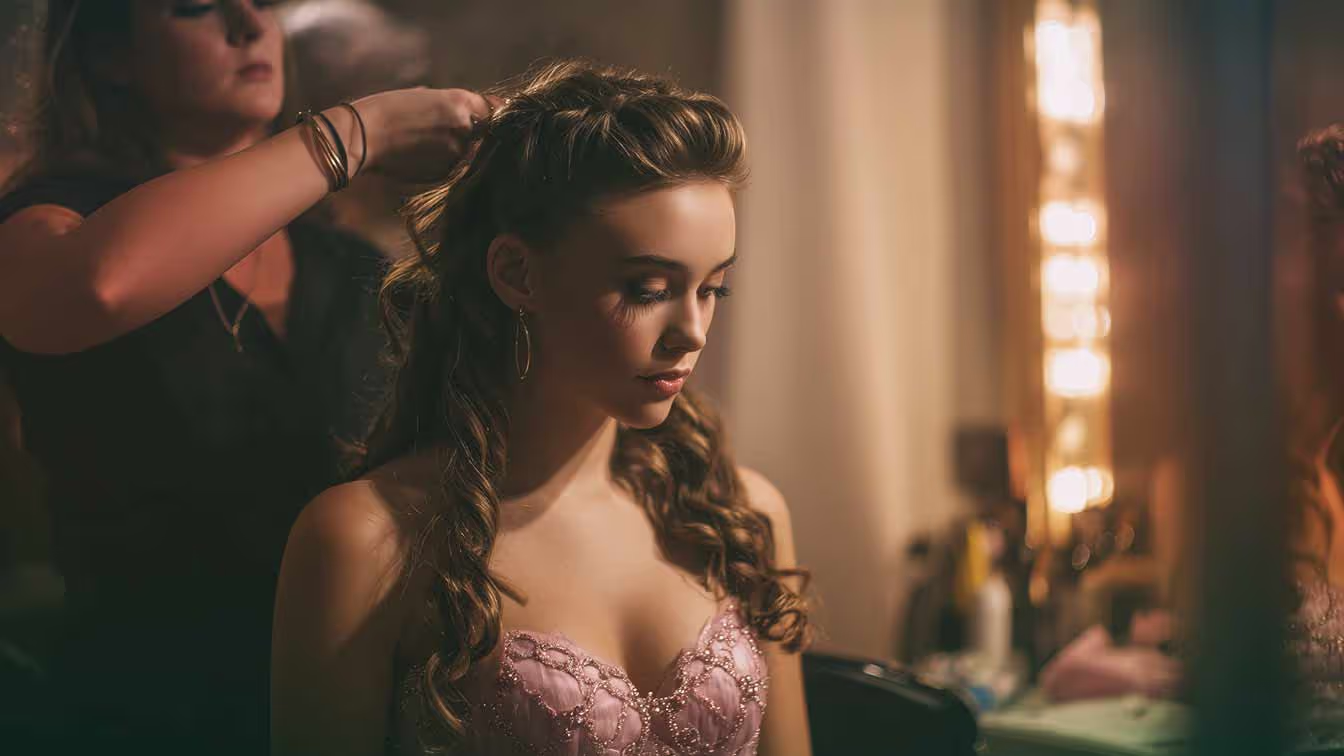
Every consultation I do, someone sits in my chair and asks the same question. "Jo, why did my last set of K-tips wreck my hair?" And almost every time, it traces back to the same thing. The bonds were never actually built for her head.
Not all keratin bonds are built the same. Custom European K-tips are hand-rolled strand by strand to match your hair's exact density. Cheap factory pre-bonded tips come stiff, plastic-heavy, and out of a box. That single difference is why so many women end up with matting, tension, and full extension trauma.
I'm certified in Great Lengths and HairTalk USA, I've done hundreds of K-tip installs at this point, and I hand-build every bond at the chair. Here's what I've actually learned from all of it.
What actually makes a K-tip a K-tip
The biggest myth I bust in almost every consultation: people think all keratin extensions come pre-made in a little package and the stylist just sticks them on. For a lot of salons, that's exactly what's happening.
There's a massive gap between standard factory pre-bonded tips and custom European K-tips. They're completely different animals.
Factory Pre-Bonded
Out of the box, one-size
Tips arrive already dipped into uniform shapes (U-tips, flat-tips, whatever). The stylist pulls them straight from the box and fuses them. Because they're pre-cut, there's almost no control over matching the bond to your density, especially around finer zones like the temples or a thinning crown.
Custom European
Hand-rolled at the chair
Single-donor ponytails and pure keratin, with every capsule built on the spot. I measure your natural strand density, match the extension hair to it, and melt the keratin with a heated fusion iron to roll a flexible, custom-sized bond. No two heads get the same bond size, because no two heads have the same density.
The box doesn't know your hair. I do. That's the whole point of K-tips when they're done as a craft instead of an assembly line.
Custom European bonds are right for you if
- You have fine, fragile, or thinning hair at the temples or crown
- You've had a previous set mat, shed excessively, or feel like rocks at the roots
- You want results that brush scalp to ends without a single catch
- You're investing in the method, not just the cheapest option in the room
- You want your stylist building the bond to your exact density, not pulling from a box
Signs your last install used factory tips
- The bonds felt hard or clacky right after install
- You were brushing around the roots instead of through them
- Matting started before your first maintenance appointment
- Removal was painful and came with real breakage
- Your stylist completed a full head in under two hours
Premium brand bonds absolutely have their place. I'm certified in Great Lengths for a reason, and quality keratin done right is gorgeous. The villain in this story isn't keratin bonds. It's cheap, plastic-filler factory tips slapped on without customization. The K-tip method done as actual art is in a different league.
The chemistry nobody talks about
A huge reason cheap factory tips feel heavy and rigid is what they're actually made of, and nobody's putting it on the label.
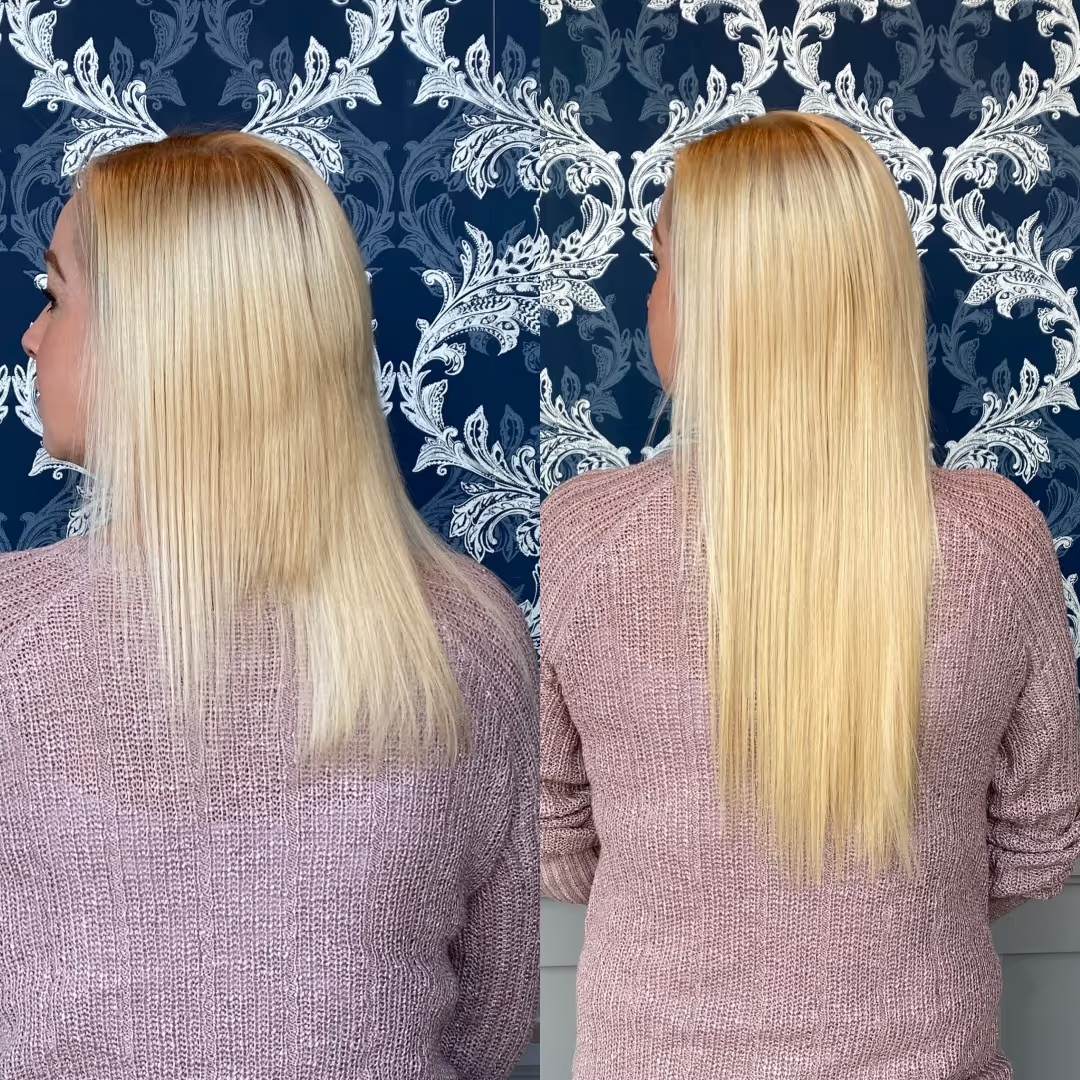
To keep production cheap and make sure pre-made tips survive shipping and shelf life, a lot of mass-produced bonds mix a tiny trace of keratin with a high amount of silicone and plastic polymers. Melt that onto someone's head and it dries completely stiff. It behaves like a hard little plastic clip pulling at the root every time she turns her head on the pillow.
Pure keratin is a whole different protein situation. It mirrors the molecular structure of human hair, so when it cures, it stays flexible. It expands and contracts a little when you wash, blow-dry, and style. It moves with your hair instead of fighting it.
After years of this, I can tell within about 30 seconds of touching someone's old install whether they got quality keratin or filler-heavy factory tips. The filler ones have a dry, clacky feel, and they sit up off the scalp instead of laying flush.
That stiffness matters even more up here at altitude. Our mile-high dryness already pulls moisture out of hair and bonds, so a rigid, brittle factory bond gets even less forgiving through a dry Colorado winter with the indoor heat blasting. Flexible keratin handles our climate so much better.
If you want to go deeper on what "seamless" really means, my invisible extensions guide covers how bond chemistry shapes the final blend.
Size matters: why micro-capsules beat chunky factory tips
This is the part that causes the most heartbreak for my fine-haired clients. Factory tips are usually dense and bulky because they're built to get a full head installed fast. On fine or fragile hair, those chunky bonds can feel like little rocks on the scalp, and worse, they put real mechanical tension on the follicle.
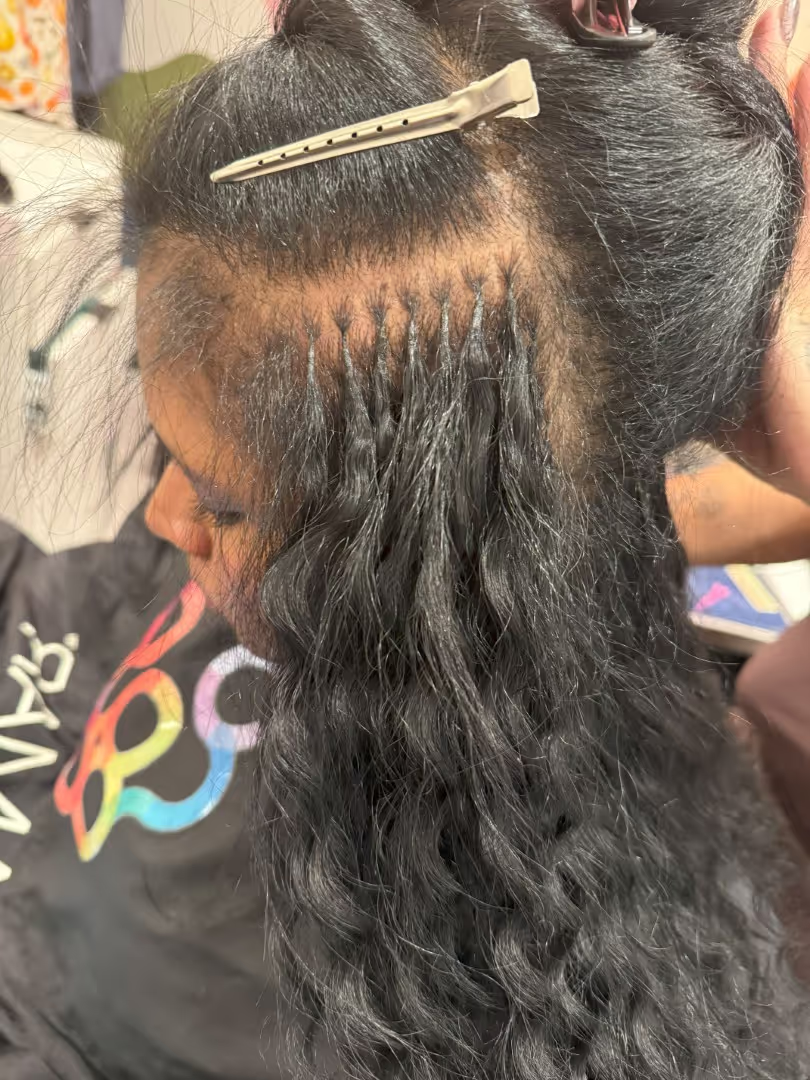
Because European K-tips are hand-rolled, I can make them micro or nano-sized, grain-of-rice small, sometimes smaller. They lay completely flat and flush against the scalp. Invisible even if the Colorado wind is whipping through the parking lot at Park Meadows.
That custom sizing is everything for delicate areas. Temples, the crown, a thinning hairline. Those zones need the lightest, smallest bonds I can build, matched to whatever density is actually there. A pre-cut factory tip can't do that. It is what it is, and your scalp just has to deal.
Fine hair is genuinely my favorite challenge. If you've been told your hair is "too thin for extensions," that usually means someone tried to use the wrong bonds on you. My full breakdown for extensions on thin hair walks through exactly how we make it safe.
| Feature | Cheap Factory K-Tips | Custom European K-Tips |
|---|---|---|
| Source material | Pre-bonded factory tips (U-tip, flat-tip) | Single-donor ponytails + pure keratin |
| Bond composition | High plastic polymers, silicone fillers | Flexible, hair-mimicking keratin protein |
| Bond size | Uniform, bulky, one-size | Micro / nano (grain-of-rice sized) |
| Scalp feel | Stiff, heavy, "rocks" when sleeping | Weightless, flexible, flush to the scalp |
| Fine-hair safety | Risk of tension, breakage, visibility | Custom density match for fragile zones |
| Brushability | Catches at the roots, high matting risk | Seamless from scalp to ends |

The shedding trap: why hair mats in the shower
Let's talk about the thing that freaks everyone out. The matting. Because it's not random, and it's not your fault.
We all naturally shed 50 to 100 strands a day. That's normal, healthy hair doing its thing. Those shed strands need a clear path to fall out or get brushed away. With a rigid, stiff factory bond sitting right at the root, the shed hair has nowhere to go. It wraps around the hard bond and the strands still attached.
Then water hits it in the shower. The second that tangled, trapped hair gets wet, it felts into a matted mess at the scalp.
I've cut clients out of mats that took an hour to gently break down, and they're sitting there convinced their own hair is "just like that." It's not. It was a placement and bond problem from the start.
Custom European micro-capsules are so small and flexible that your naturally shed hair falls cleanly or brushes right out. That's the whole magic. You can run a brush from scalp to ends without snagging on a single bond.
Our Colorado water makes this even more important. A lot of my Highlands Ranch and Castle Pines clients deal with hard water that leaves mineral buildup, and buildup plus a rigid bond plus dry mile-high air is basically a matting recipe. The right bond and the right home care routine fix that. I keep my full Colorado extension care guide and post-install aftercare page handy for exactly this reason.
At the 6-week mark, bonds should feel smooth and still firmly attached. If they're gummy, sliding, or there's matting starting at the root, something is off and we address it right then. Catching it early is everything.

The danger of stacking methods
This one's a hot take but I stand by it. There's a trend of "stacking" or doubling up methods, packing heavy hand-tied wefts right alongside K-tips for maximum volume. It sounds smart. More methods, more hair, right?
Here's what most people don't realize. Your head has distinct density zones, and overloading the scalp with a heavy weft and rigid bonds in the same area creates way too much mechanical tension. You're piling weight onto follicles that can't carry it.
And the shedding trap I just talked about gets multiplied. Now your natural daily shedding has two things trapping it: the stiff bonds and the tightly packed weft row. When you can't brush cleanly between the scalp and the attachment point, those shed hairs felt into the worst matting I see, the kind that causes real panic and damage during removal.
A client came to me after a combo install somewhere else, wefts and factory K-tips at the same time. Her hair was matting in the shampoo bowl every single wash, and chunks were still coming out as she drove away from her removal appointment. That's not shedding. That's hair getting pulled from the follicle because the weight distribution was all wrong.
Wefts are wonderful when they're the right call, gentle and gorgeous for the right hair. The problem is never the method by itself. It's stacking weight on a scalp that can't handle it. Skill and a real plan beat "more is more" every time. If you're trying to figure out what's right for your head, my comparison of extension methods lays out the honest pros and cons of each.
What about "ice bonds" (cold gel fusion)?
This one comes up a lot lately, so let's clear it up, because there's a lot of misinformation floating around online.
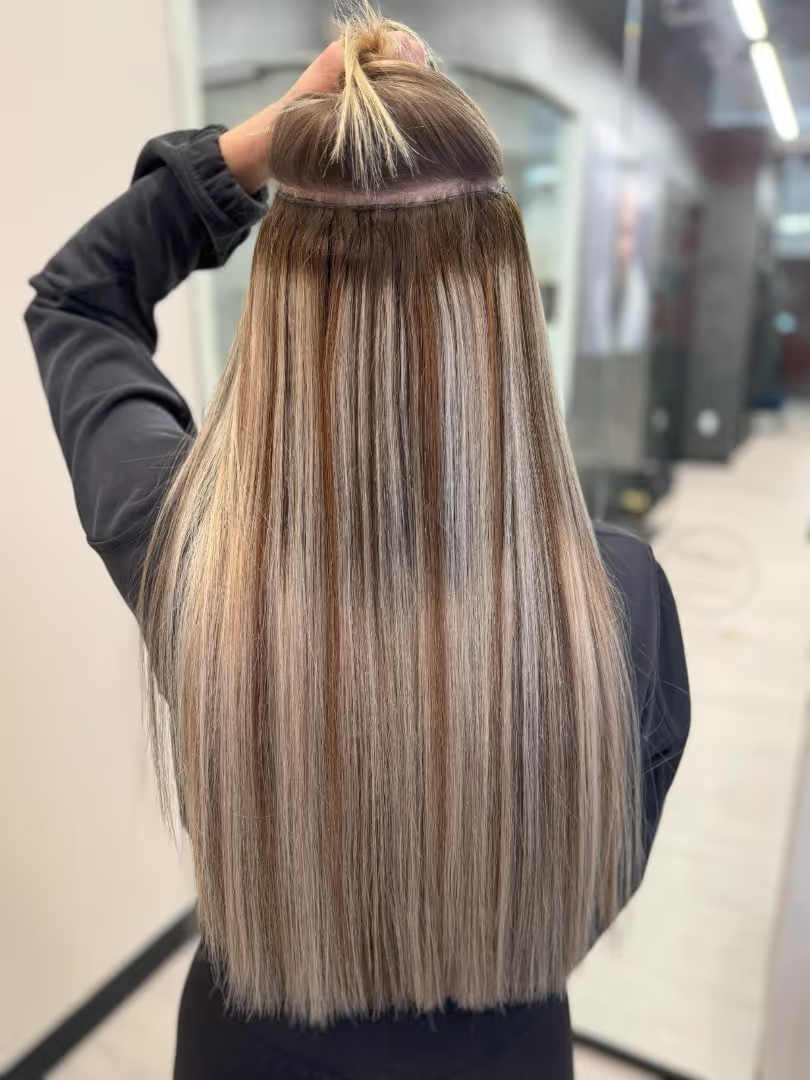
Ice fusion, or cold gel fusion, gets thrown into the strand-by-strand conversation as an alternative. Instead of melting a keratin bond with heat, it uses a liquid ice gel and a chemical activator to build a microscopic bond at the attachment point. The bonds it creates are tiny, some of the smallest, lightest bonds physically possible. That makes it kind of incredible for ultra-fine hair or filling in sparse hairlines.
"It's a cold install, so no hot tools ever touch your hair." Not true. Yes, it goes in cold. But you absolutely must use a flat iron during removal to gently warm and break down that gel bond safely. Anyone claiming ice bonds involve zero heat ever doesn't understand the removal, and that's how natural hair gets snapped.
Is it a good method? Sure, in the right hands, on the right hair. Is it magically "no heat, no risk"? Nope. Any method can be safe or destructive depending entirely on who's doing it and how they remove it.
The lightness of the bond is real and useful, especially for those temple and hairline zones. I just want you walking into any consultation able to spot the marketing fluff from the facts. If natural movement and a featherweight feel are your priorities, peek at my breakdown of natural-movement extension options so you can ask smarter questions.

Healing extension trauma
Some of my most rewarding clients are the ones I call my panickers. Women who've been burned so badly by a previous install that they get real anxiety the second anyone goes near their head with a bond.
I get it. When your hair has literally matted in the shampoo bowl, when chunks came out after an appointment, that's trauma. That's not being dramatic, that's a genuine fear response built from a bad experience.
One client drove down from Castle Pines and flinched every time I touched her crown, because that's exactly where her last stylist had over-packed heavy bonds. When I took out her custom European K-tips at the first maintenance and ran my hands through her hair, only one or two strands came loose. She looked at me and said, "Wait, I can literally brush through it." That line is the whole job for me.
When custom bonds match your natural density and let the hair move freely, you're not creating a trap. You're letting hair behave like hair.
The part that surprises people: I often have to completely re-educate these clients on how to brush and wash at home. They've picked up all these protective habits, barely brushing, skipping the roots, terrified to touch the bonds, because they were trying to survive a bad install. So we start over. Brush from the bottom up, get all the way to the scalp gently, wash properly. Breaking those fear habits is half the healing.
If you've had a rough go with extensions before, please don't write off the whole thing. Read my guide to extensions for damaged hair and come in for a real conversation. Trust gets rebuilt one healthy install at a time.

How to know your K-tips are done right
So how do you actually tell if you're getting a custom, healthy install versus a rushed factory one? After years of doing this, here's what I look for, and what you should too.
Healthy bonds feel smooth and firm but flexible, never hard like a bead. They lay flat against the scalp so you can't feel them when you rest your head. You should be able to brush scalp to ends with zero catching. At the 6-week mark, the outgrowth should look clean and even, not matted or sliding.
A lot of this comes down to where you go. A high-volume chain treats extensions as an add-on menu item, squeezing installs between a hundred other services. A boutique specialist is doing extensions all day, every day, building bonds to your specific head. That difference shows up in your hair health for months.
| What to look for | Boutique Specialist | High-Volume Chain |
|---|---|---|
| Customization | Every bond hand-built to your density | Pre-made factory tips, one-size approach |
| Hair-health priority | Weight balanced to the scalp first | Speed first, volume over follicle safety |
| Consultation depth | Full sit-down, density check, color match | Quick add-on, minimal assessment |
| Method expertise | Multi-method certified, picks what fits you | Limited to whatever the salon offers |
| Ongoing support | Home-care coaching + maintenance plan | You're on your own after install |
You've got a healthy install if
Bonds feel smooth and flexible, you can't feel them when you sleep, brushing scalp to ends doesn't catch a single one, and 6-week outgrowth looks clean and even.
Red flags worth checking
Bonds feel hard or clacky, you're catching at the roots when you brush, you're seeing chunks come out at removal, or there's matting starting at the scalp before maintenance.
The best way to know for sure is to come sit in my chair. A real consultation tells me everything about your density, your history, and what'll actually keep your hair healthy. You can read what to expect from my consultation process before you book.

Questions to ask before you book
- Do you hand-roll your bonds on site, or work from pre-made tips?
- This is the fastest way to know what you're getting. A stylist building custom bonds will walk you through the process. One grabbing from a box will often redirect the question.
- What keratin brand do you use, and what's in it?
- Quality keratin like Great Lengths uses high-protein, low-filler formulas. If a stylist can't tell you what's in their keratin, that's worth noting before you commit.
- Can you size the bonds differently for my temples and crown?
- Your hairline zones are almost always finer than the back and sides. A stylist doing real custom work accounts for this automatically. Factory tips can't.
- How long does your removal process take, and what does it feel like?
- Clean European K-tip removal takes 1 to 2 hours and shouldn't hurt. A rushed or rough-sounding removal is often a signal about the install quality. Both ends of the process matter.
Frequently asked questions
Are K-tip or keratin bond extensions safe for fine or thinning hair?
Yes, when the bonds are custom-built to your density. Hand-rolled European micro-capsules can be made grain-of-rice small so they lay flush and don't overload fragile follicles. The danger comes from bulky, one-size factory tips used on hair that can't carry the weight.
Why did my last set of extensions mat or feel heavy?
Almost always because rigid bonds, or stacked methods like wefts plus K-tips, trapped your natural daily shedding at the root. When that trapped hair gets wet, it felts into matting. Flexible, properly sized bonds let shed hair fall and brush out cleanly.
What are custom European K-tips actually made of?
Single-donor ponytails and pure keratin, hand-rolled at the chair. Pure keratin mirrors the structure of human hair, so the bond stays flexible and moves with you. Cheap factory tips mix a trace of keratin with plastic polymers and silicone fillers that dry stiff.
Can I really brush through my hair with K-tips in?
You should be able to, yes. With a well-placed custom install, you can run a brush from scalp to ends without catching a single bond. If your brush snags at the roots, that's a red flag worth getting checked.
Is it bad to combine wefts and K-tips at the same time?
It can be, if it overloads a density zone. Stacking heavy wefts alongside rigid bonds piles too much tension on the follicles and creates a double shedding trap. Sometimes one method done beautifully is far healthier than three crammed together.
Do "ice bonds" (cold gel fusion) really use no heat?
No. They go in cold, but removal requires a flat iron to gently warm and break down the gel bond safely. Anyone claiming ice bonds involve zero heat ever doesn't understand the removal process, and that puts your natural hair at risk.
How long do K-tip extensions last, and how do I care for them in Colorado?
A custom K-tip install typically lasts around 3 to 4 months before a move-up with proper home care. In our dry, mile-high climate, use a hydrating routine, watch for hard-water buildup in areas like Highlands Ranch and Castle Pines, and brush all the way to the scalp gently every day.
{"@context":"https://schema.org","@type":"FAQPage","mainEntity":[{"@type":"Question","name":"Are K-tip or keratin bond extensions safe for fine or thinning hair?","acceptedAnswer":{"@type":"Answer","text":"Yes, when the bonds are custom-built to your density. Hand-rolled European micro-capsules can be made as small as a grain of rice so they lay flush and don't overload fragile follicles. The risk comes from bulky, one-size factory tips used on hair that can't carry the weight."}},{"@type":"Question","name":"Why did my last set of extensions mat or feel heavy?","acceptedAnswer":{"@type":"Answer","text":"Almost always because rigid bonds, or stacked methods like wefts plus K-tips, trapped your natural daily shedding at the root. When that trapped hair gets wet it felts into matting. Flexible, properly sized custom bonds let shed hair fall and brush out cleanly."}},{"@type":"Question","name":"What are custom European K-tips actually made of?","acceptedAnswer":{"@type":"Answer","text":"Single-donor ponytails and pure keratin, hand-rolled at the chair. Pure keratin mirrors the structure of human hair so the bond stays flexible and moves with you. Cheap factory tips mix a trace of keratin with plastic polymers and silicone fillers that dry stiff and rigid."}},{"@type":"Question","name":"Can I really brush through my hair with K-tips in?","acceptedAnswer":{"@type":"Answer","text":"You should be able to. With a well-placed custom install you can run a brush from scalp to ends without catching a single bond. If your brush snags at the roots, that is a warning sign worth getting checked by an experienced extension specialist."}},{"@type":"Question","name":"Do ice bonds (cold gel fusion) really use no heat?","acceptedAnswer":{"@type":"Answer","text":"No. Ice bonds go in cold, but removal requires a flat iron to gently warm and break down the gel bond safely. Anyone claiming ice bonds involve zero heat ever does not understand the removal process, which can put your natural hair at risk of snapping."}},{"@type":"Question","name":"How long do K-tip extensions last and how do I care for them in Colorado?","acceptedAnswer":{"@type":"Answer","text":"A custom K-tip install typically lasts about 3 to 4 months before a move-up with proper home care. In Colorado's dry, mile-high climate, use a hydrating routine, watch for hard-water buildup in areas like Highlands Ranch and Castle Pines, and brush gently all the way to the scalp daily."}}],"author":{"@type":"Organization","name":"Jo Hearts Hair","address":{"@type":"PostalAddress","streetAddress":"9227 East Lincoln Ave, Suite #111","addressLocality":"Lone Tree","addressRegion":"CO","postalCode":"80124","addressCountry":"US"},"sameAs":["https://instagram.com/joheartshair"]},"dateModified":"2026-06-01","about":{"@type":"Thing","name":"A hair-health comparison of custom European K-tip extensions versus cheap factory pre-bonded K-tips."}}